
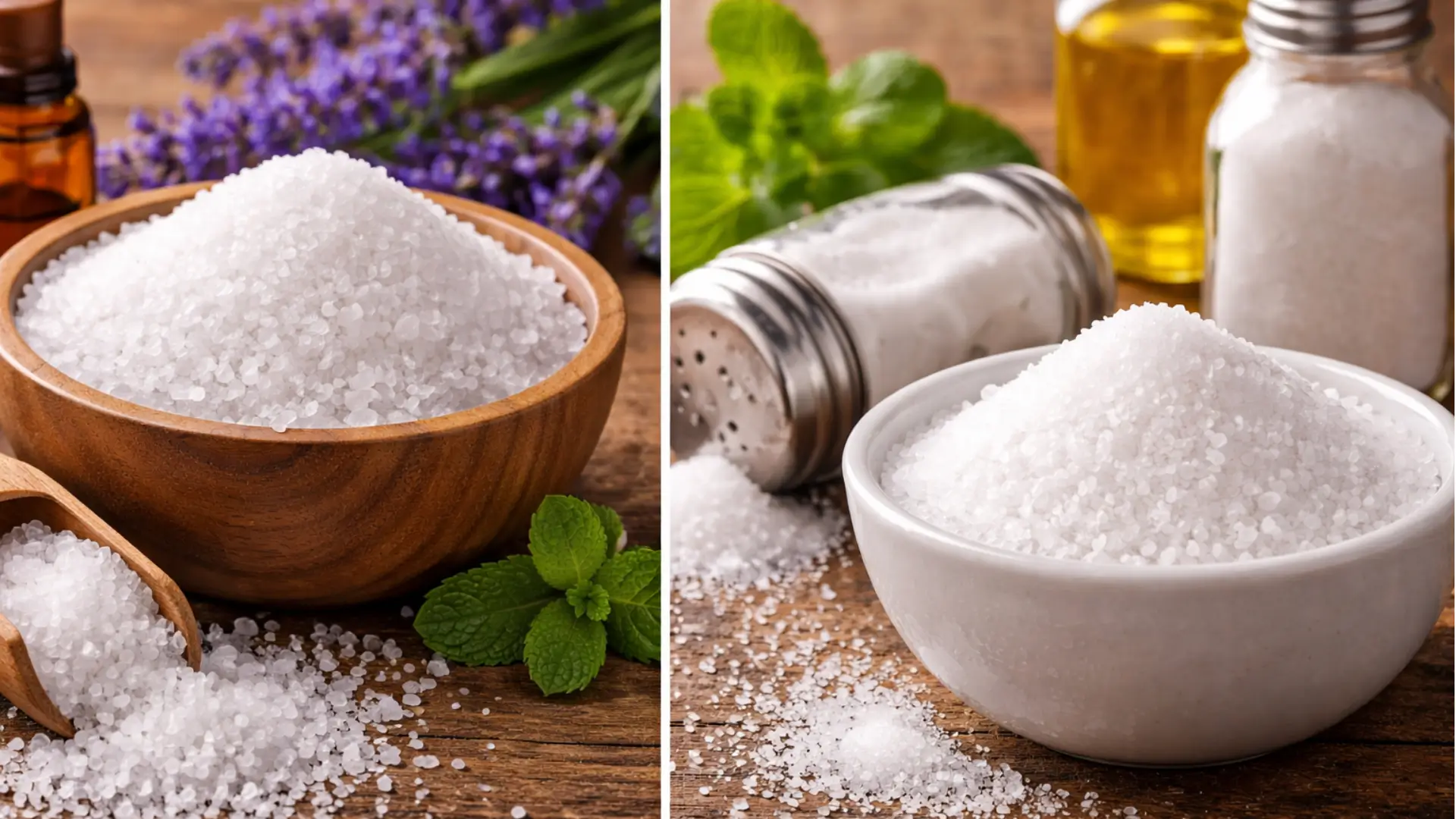
If you’ve ever wondered what is the difference between epsom salt and regular salt, you’re not alone. Many people assume they’re the same thing because they look alike. However, that couldn’t be further from the truth. While both salts appear similar, their composition, uses, and benefits are completely different.
In fact, understanding the difference can help you choose the right option for foot soaks, skin care, infections, or even daily use. Moreover, using the wrong type of salt may lead to ineffective results, especially when treating minor conditions at home.
In this guide, we’ll break everything down in simple terms. So, by the end, you’ll clearly understand how epsom salt compares to regular salt and when to use each one.
When exploring natural remedies and wellness tips, it’s also helpful to understand how simple ingredients can make a big difference in your routine. For example, many people are now turning to easy home solutions for better health. Learn more about the powerful gelatin method with this simple 3-ingredient trick and see how everyday items can support your overall well-being alongside practices like epsom salt soaking.
Understanding What Is the Difference Between Epsom Salt and Regular Salt
Why People Confuse Epsom Salt and Regular Salt
At first glance, epsom salt and regular salt look almost identical. Both are white, crystalline substances, and both dissolve easily in water. Because of this, many people assume they serve the same purpose. However, that’s where the confusion begins.
For starters, epsom salt is not actually “salt” in the traditional sense. Instead, it’s a mineral compound made of magnesium and sulfate. On the other hand, regular salt also known as table salt is made of sodium chloride, which is commonly used in cooking.
Additionally, their uses overlap slightly in home remedies, especially for soaking. That said, while both can be used in water, their effects on the body are very different. For example, epsom salt is often linked to muscle relaxation, whereas regular salt is more commonly used for cleaning or preserving food.
As a result, people often search questions like “can I use regular salt instead of epsom salt for infection” or “epsom salt vs table salt for soaking.” These questions highlight how common the misunderstanding really is.
Quick Overview of Key Differences Between Epsom Salt and Table Salt
To make things clearer, let’s quickly compare the two side by side:
| Feature | Epsom Salt | Regular Salt |
|---|---|---|
| Chemical Name | Magnesium Sulfate | Sodium Chloride |
| Common Use | Bath soaks, muscle relief | Cooking, seasoning |
| Skin Benefits | Helps relax muscles, reduce swelling | Limited skin benefits |
| Edibility | Not typically consumed | Safe for consumption |
| Use for Infection | Often used in home remedies | Mild antiseptic use |
From this table, it’s easy to see that the difference between epsom salt and regular salt goes far beyond appearance. While they may look alike, their functions are entirely different.
Furthermore, epsom salt is widely used in wellness routines, especially for foot soaks and baths. Meanwhile, regular salt plays a major role in food preparation and preservation.
Because of these differences, it’s important not to substitute one for the other without understanding the impact. For instance, using table salt instead of epsom salt for a foot soak may not provide the same soothing effect.
So, now that you understand the basics, let’s dive deeper into what epsom salt actually is and why it’s so popular in health and wellness.
What Is Epsom Salt? Composition, Uses, and Benefits
Chemical Structure of Epsom Salt (Magnesium Sulfate Explained)
To fully understand what is the difference between epsom salt and regular salt, you first need to know what epsom salt actually is. Despite its name, epsom salt is not a true salt like table salt. Instead, it is a naturally occurring mineral compound known as magnesium sulfate.
Chemically, epsom salt is made up of three key elements: magnesium, sulfur, and oxygen. Unlike sodium chloride (regular salt), it does not contain sodium, which is why it behaves very differently in the body.
Moreover, magnesium plays a crucial role in many bodily functions. For instance, it supports muscle function, nerve signaling, and even helps regulate stress levels. Because of this, epsom salt has become a popular ingredient in wellness routines.
Interestingly, epsom salt got its name from a bitter saline spring in Epsom, England. Since then, it has been widely used for therapeutic purposes rather than cooking.
As a result, when people compare epsom salt vs table salt, they are actually comparing two completely different chemical compounds with distinct purposes.
Common Uses of Epsom Salt for Health, Skin, and Feet
Now that you understand its composition, let’s explore why epsom salt is so widely used. One of the main reasons is its versatility in home remedies and personal care.
First and foremost, epsom salt is commonly used in foot soaks. Many people rely on it to relieve tired feet, reduce swelling, and soften skin. This is why searches like “epsom salt vs table salt for foot soak” are so common.
Additionally, epsom salt is often used in baths to help relax muscles. After a long day or intense workout, soaking in warm water with epsom salt may help ease tension and promote relaxation.
Furthermore, epsom salt is sometimes used for minor skin concerns. For example, people use it for ingrown toenails, small wounds, or irritation. This leads to frequent questions like “epsom salt vs table salt for wounds” or “epsom salt vs table salt for infection.”
Here are some of the most popular uses of epsom salt:
- Soothing sore muscles and joint pain
- Relaxing the body during baths
- Foot soaks for odor and swelling
- Supporting skin care routines
- Helping with ingrown toenails
However, it’s important to note that while epsom salt is widely used, scientific evidence on some benefits is still limited. Even so, many people continue to use it because of its calming and soothing effects.
Because of these benefits, epsom salt is often the preferred choice over regular salt for soaking and wellness purposes.
Now that we’ve covered epsom salt in detail, the next step is to understand what regular salt is and how it compares in everyday use.
What Is Regular Salt? Types and Everyday Uses
What Is Table Salt Made Of? (Sodium Chloride Basics)
To better understand what is the difference between epsom salt and regular salt, it’s essential to look closely at regular salt itself. Unlike epsom salt, regular salt is a true salt known scientifically as sodium chloride.
This compound is made up of sodium and chlorine, two elements that combine to form the salt most people use every day. In fact, table salt is one of the most common ingredients found in kitchens across the United States and around the world.
Moreover, sodium plays a vital role in the body. It helps maintain fluid balance, supports nerve function, and aids muscle contractions. However, too much sodium can lead to health issues, which is why moderation is key.
In addition, most table salt is refined and often contains added iodine. This added mineral helps prevent iodine deficiency, making table salt not only a flavor enhancer but also a source of essential nutrients.
Because of its chemical structure, regular salt behaves very differently compared to epsom salt. For example, while epsom salt is used externally for soaking, regular salt is primarily used internally in food.
Types of Regular Salt: Table Salt vs Sea Salt vs Himalayan Salt
Although many people think of regular salt as just “table salt,” there are actually several types available. Each one has unique characteristics, yet they all share the same basic chemical foundation: sodium chloride.
Here are the most common types of regular salt:
| Type of Salt | Description | Common Uses |
|---|---|---|
| Table Salt | Highly refined, fine texture, often iodized | Cooking, baking |
| Sea Salt | Less processed, contains trace minerals | Cooking, seasoning |
| Himalayan Pink Salt | Mined salt with natural minerals | Cooking, decorative use |
First, table salt is the most widely used. It has a fine texture and dissolves quickly, making it ideal for everyday cooking.
Next, sea salt is produced by evaporating seawater. Because it is less processed, it retains trace minerals, which can slightly affect flavor and color.
Then, Himalayan pink salt is known for its distinctive color and mineral content. While it’s often marketed as healthier, the differences are generally minimal when used in normal amounts.
Despite these variations, all these salts function similarly in the body. Therefore, when people ask questions like “can I use regular salt instead of epsom salt to soak feet”, they are still referring to sodium chloride-based salts, which do not offer the same benefits as epsom salt.
Additionally, regular salt has some mild antiseptic properties. For example, saltwater rinses are commonly used for oral hygiene or minor skin cleansing. However, it does not provide the same muscle-relaxing effects associated with epsom salt.
So, while regular salt is essential in cooking and has some basic home uses, it serves a completely different purpose compared to epsom salt.
Now that you clearly understand both types, let’s move on to a direct comparison in the next section to highlight their key differences in detail.
Epsom Salt vs Regular Salt: Key Differences Explained
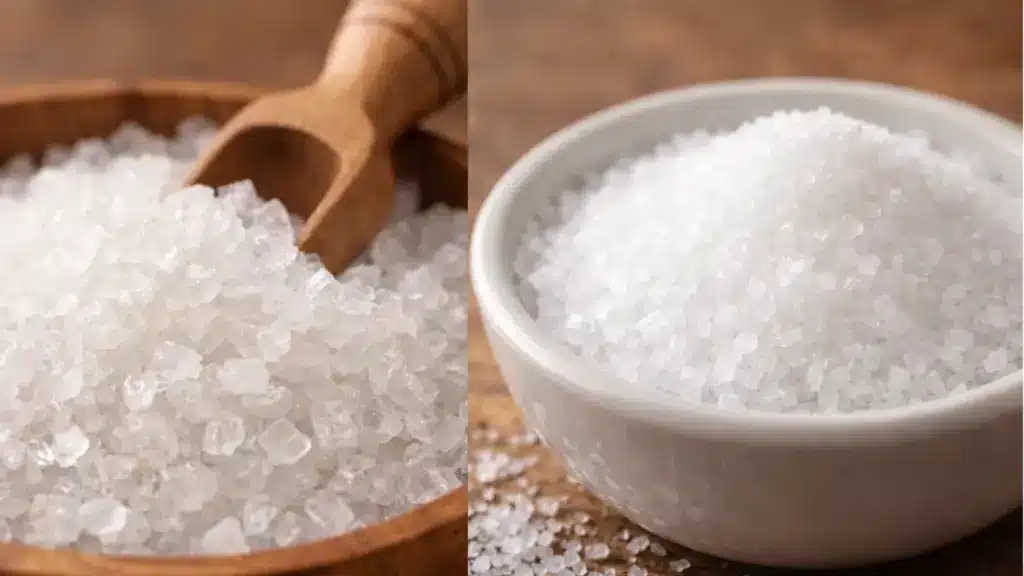
Chemical Differences Between Epsom Salt and Regular Salt
Now that you understand both substances individually, let’s directly answer the main question: what is the difference between epsom salt and regular salt at a chemical level.
First of all, the biggest difference lies in their composition. Epsom salt is magnesium sulfate, while regular salt is sodium chloride. Although they may look similar, their chemical structures are entirely different.
Because of this, they interact with the body in unique ways. Magnesium in epsom salt is often associated with muscle relaxation and calming effects. In contrast, sodium in regular salt mainly helps regulate fluids and nerve signals.
Additionally, epsom salt is not meant for cooking. On the other hand, regular salt is essential in food preparation. This alone highlights a major functional difference.
To make it even clearer, here’s a simple comparison:
| Aspect | Epsom Salt | Regular Salt |
|---|---|---|
| Chemical Formula | MgSO₄ | NaCl |
| Main Element | Magnesium | Sodium |
| Primary Use | External (soaks, baths) | Internal (food, cooking) |
| Taste | Bitter | Salty |
| Skin Absorption | Possible | Minimal effect |
As you can see, the difference between epsom salt and regular salt is not just minor it’s fundamental.
Differences in Health Benefits, Absorption, and Uses
Beyond chemistry, the practical differences are just as important. In fact, this is where most people get confused when choosing between the two.
To begin with, epsom salt is widely used in wellness routines. Many people believe it helps reduce muscle soreness, relax the body, and soothe tired feet. That’s why it’s commonly used in baths and foot soaks.
Meanwhile, regular salt has limited use in these situations. While saltwater can help clean minor wounds or act as a mild antiseptic, it doesn’t provide the same soothing experience.
Furthermore, one of the key differences is how each interacts with the skin. Some believe magnesium from epsom salt can be absorbed through the skin, although research is still debated. Even so, users often report feeling relaxed after soaking.
On the contrary, regular salt does not offer this type of effect. Instead, it may sometimes dry out the skin if used excessively.
Another important point is usage safety. For example:
- Epsom salt is typically used externally in baths or soaks
- Regular salt is safe for consumption but not designed for therapeutic soaking
Because of these differences, questions like “epsom salt vs table salt for soaking” or “epsom salt vs table salt for infection” continue to trend online.
In short, while both salts have their place, they are not interchangeable in most cases. Using regular salt instead of epsom salt may not deliver the same results, especially for relaxation or foot care.
Now that the differences are clear, let’s explore how each performs specifically in foot soaks and personal care routines.
Epsom Salt vs Table Salt for Soaking and Foot Care
Can You Use Regular Salt Instead of Epsom Salt for Foot Soaks?
When people ask what is the difference between epsom salt and regular salt, this is one of the most common real life concerns. Many wonder if they can simply swap one for the other during a foot soak.
The short answer is: yes, you can use regular salt but it won’t give the same results.
First, epsom salt is widely used for foot soaks because of its magnesium content. Many users believe it helps relax muscles, reduce swelling, and ease foot discomfort. That’s why it’s often recommended after long days of standing or walking.
On the other hand, regular salt whether table salt or sea salt mainly works as a cleansing agent. It can help clean the skin and may reduce bacteria due to its mild antiseptic properties. However, it lacks the soothing and muscle relaxing qualities associated with epsom salt.
So, if your goal is simply to clean your feet, regular salt can work in a pinch. But if you’re looking for relief from soreness or fatigue, epsom salt is the better choice.
Here’s a quick comparison:
| Purpose | Epsom Salt | Regular Salt |
|---|---|---|
| Relaxation | Excellent | Limited |
| Cleaning | Good | Good |
| Muscle Relief | Strong | None |
| Skin Softening | Effective | Moderate |
Therefore, while you can substitute, it’s not ideal. This explains why searches like “can I use regular salt instead of epsom salt to soak feet” are so common.
Epsom Salt vs Table Salt for Ingrown Toenails and Foot Pain
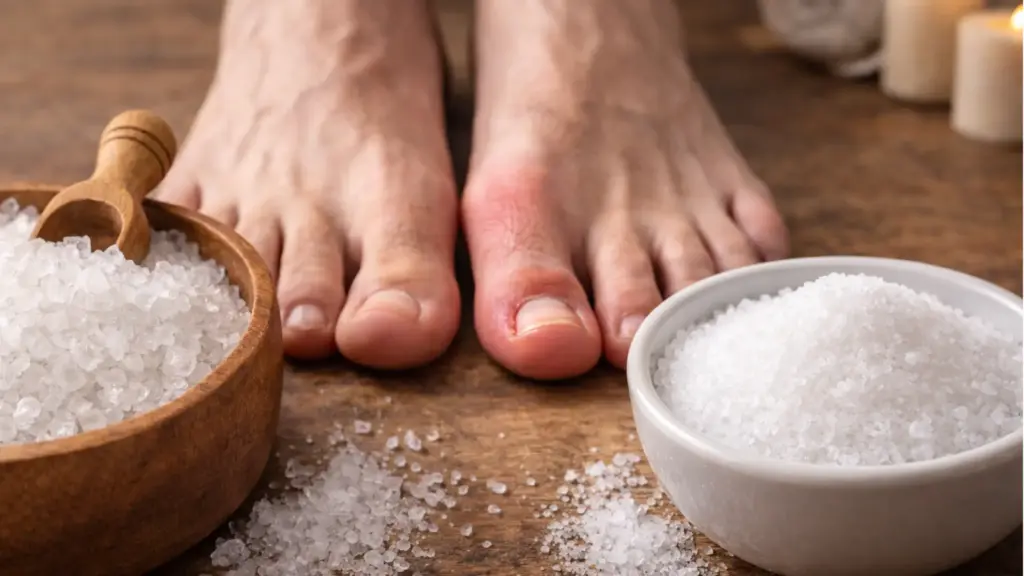
Another major concern is foot health, especially conditions like ingrown toenails or general foot pain. In these cases, choosing the right type of salt becomes even more important.
Epsom salt is often recommended for ingrown toenails because it may help soften the skin and reduce inflammation. As a result, it can make it easier to manage discomfort and promote healing. This is why terms like “epsom salt vs table salt ingrown toenail” frequently appear in search results.
Meanwhile, regular salt can still play a role. For example, a warm saltwater soak can help clean the affected area and reduce bacteria. However, it does not provide the same soothing effect or potential anti-inflammatory benefits as epsom salt.
Additionally, when dealing with foot pain, epsom salt is usually the preferred option. Many people use it after workouts or long hours on their feet to help relax muscles and ease tension.
In contrast, regular salt simply doesn’t offer that level of relief. At best, it may provide basic cleansing without addressing the root discomfort.
So, when comparing epsom salt vs table salt for foot soak, the difference becomes very clear:
- Use epsom salt for relief and relaxation
- Use regular salt mainly for cleaning purposes
Now that you understand how both salts perform in foot care, let’s take a closer look at their effectiveness for infections and wound treatment.
Epsom Salt vs Regular Salt for Infections and Wounds
Is Epsom Salt Better Than Regular Salt for Infection Treatment?
When discussing what is the difference between epsom salt and regular salt, one of the most searched concerns is infection care. People often wonder which option works better for treating minor infections at home.
To begin with, regular salt has long been used as a natural cleansing agent. Saltwater solutions can help draw out moisture and create an environment where bacteria struggle to survive. That’s why salt rinses are commonly used for oral care and minor skin cleaning.
However, epsom salt is often preferred in soaking situations. While it is not a disinfectant in the same way as sodium chloride, it is believed to help reduce swelling and ease discomfort. As a result, it may support the healing process indirectly.
So, is epsom salt better? It depends on the goal. If you want to clean and disinfect, regular salt may be slightly more effective. But if your goal is to soothe inflammation and discomfort, epsom salt is usually the better option.
This explains why many people search for “epsom salt vs table salt for infection” or “can I use regular salt instead of epsom salt for infection.” The answer is not one-size-fits-all it depends on your specific need.
Epsom Salt vs Table Salt for Wounds: What Works Best?
When it comes to minor wounds, both salts can be useful but in different ways. Understanding this distinction is key to making the right choice.
First, regular salt is commonly used in saline solutions. These solutions are effective for gently cleaning wounds, removing debris, and reducing the risk of infection. Because of this, regular salt plays a more direct role in wound hygiene.
On the other hand, epsom salt is often used in warm soaks for conditions like minor cuts, splinters, or skin irritation. It may help reduce swelling and soften the skin, making it easier for the body to heal naturally.
Here’s a simple comparison to clarify:
| Use Case | Epsom Salt | Regular Salt |
|---|---|---|
| Cleaning wounds | Limited | Effective |
| Reducing swelling | Good | Minimal |
| Soothing pain | Strong | Mild |
| Fighting bacteria | Indirect | Direct |
Additionally, it’s important to use both safely. For example, highly concentrated salt solutions especially with regular salt can irritate the skin if overused. Therefore, always dilute properly in warm water.
In summary, when comparing epsom salt vs table salt for wounds, the best choice depends on your goal:
- Use regular salt for cleaning and disinfecting
- Use epsom salt for soothing and reducing discomfort
Now that we’ve explored infections and wound care, let’s move on to comparing epsom salt with other alternatives like sea salt and baking soda.
Epsom Salt vs Sea Salt and Other Alternatives
Epsom Salt vs Sea Salt: Which One Should You Choose?
When exploring what is the difference between epsom salt and regular salt, many people also compare epsom salt with sea salt. At first, they may seem similar because both are used in baths and wellness routines. However, their properties and benefits differ significantly.
Sea salt is a type of regular salt made by evaporating seawater. Like table salt, it is primarily composed of sodium chloride, although it may contain trace minerals. Because it is less processed, some people prefer it for natural remedies.
On the other hand, epsom salt is magnesium sulfate, which gives it completely different effects. While sea salt may help cleanse and refresh the skin, epsom salt is often associated with muscle relaxation and soothing discomfort.
So, which one should you choose? It depends on your goal:
- If you want a detox-like soak or muscle relief, epsom salt is usually the better option
- If you want a simple cleansing soak, sea salt can work just fine
Additionally, epsom salt is generally more popular for foot soaks and post-workout baths. Meanwhile, sea salt is often used in scrubs or skincare routines due to its texture and mineral content.
This is why comparisons like “epsom salt vs sea salt” are so common people are trying to match the right salt to the right purpose.
Is Baking Soda (Bicarbonate of Soda) the Same as Epsom Salt?
Another common question related to what is the difference between epsom salt and regular salt is whether baking soda can be used as a substitute. The short answer is no they are completely different substances.
Baking soda, also known as bicarbonate of soda, is a chemical compound called sodium bicarbonate. Unlike epsom salt or regular salt, it has unique properties that make it useful for cleaning, deodorizing, and even baking.
However, baking soda is sometimes added to baths or foot soaks. It can help soften the skin, reduce odor, and create a gentle cleansing effect. Because of this, some people mistakenly think it works the same as epsom salt.
In reality, the differences are clear:
- Epsom salt focuses on muscle relaxation and soothing effects
- Baking soda focuses on cleansing and odor control
Therefore, while both can be used in water, they serve different purposes. Substituting one for the other may not deliver the expected results.
So, when people ask “is bicarbonate of soda the same as epsom salt?”, the answer is simple: they are not the same, and they should be used based on their specific benefits.
Now that we’ve compared epsom salt with other alternatives, let’s look at whether you can safely substitute regular salt for epsom salt in different situations.
Can You Substitute Regular Salt for Epsom Salt?
When You Can Use Regular Salt Instead of Epsom Salt
At this point, you clearly understand what is the difference between epsom salt and regular salt, but the big practical question remains: can you actually substitute one for the other?
The answer is yes but only in certain situations.
For example, if your goal is basic cleansing, regular salt can work as a temporary substitute. A simple saltwater soak can help clean the skin, reduce odor, and provide mild antibacterial effects. Because of this, some people use it when epsom salt is not available.
Additionally, regular salt can be used for:
- Cleaning minor cuts or skin areas
- Basic foot soaking for hygiene
- Mouth rinses and simple saline solutions
However, these uses are mainly surface-level. They do not provide the deeper soothing or relaxing effects associated with epsom salt.
That’s why, in many cases, regular salt is seen as a backup option rather than a true replacement. Searches like “can I use regular salt instead of epsom salt for infection” or “epsom salt vs table salt for soaking” highlight this exact concern.
Risks and Limitations of Using Table Salt as a Substitute
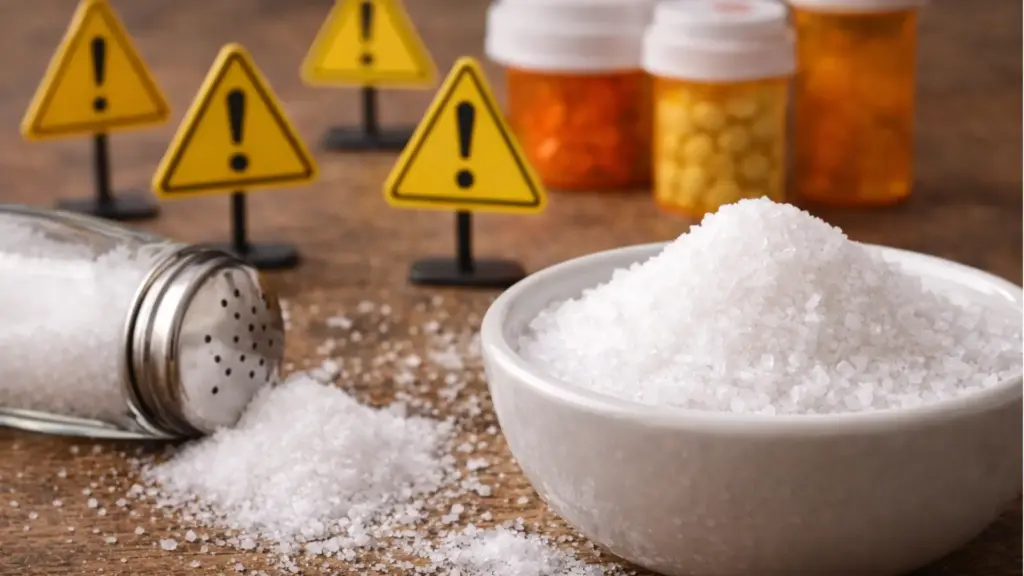
While substituting may seem convenient, there are important limitations to consider. In fact, using regular salt instead of epsom salt can sometimes lead to disappointing results.
First, regular salt does not contain magnesium. As a result, it cannot provide the same muscle-relaxing or anti-inflammatory benefits. This is especially important for people using foot soaks to relieve pain or swelling.
Second, regular salt may be harsher on the skin when used in higher concentrations. It can cause dryness or irritation, particularly if used frequently. On the contrary, epsom salt is generally gentler in soaking routines.
Another limitation is effectiveness. For example:
- For muscle soreness → regular salt is ineffective
- For relaxation → limited benefit
- For swelling → minimal impact
Because of these factors, substituting regular salt for epsom salt is not recommended for therapeutic purposes. It may work in a pinch, but it won’t deliver the same results.
In short, understanding what is the difference between epsom salt and regular salt helps you avoid these common mistakes. Choosing the right type ensures better outcomes and a more effective home remedy experience.
Now that substitution is clear, let’s finish by exploring practical tips and safety guidelines for using both salts correctly.
Practical Uses and Safety Tips for Both Salts
Safe Ways to Use Epsom Salt and Regular Salt at Home
By now, you fully understand what is the difference between epsom salt and regular salt, but knowing how to use each one safely is just as important.
First, epsom salt is best used externally. It is commonly added to warm water for baths or foot soaks. Typically, 1–2 cups in a bathtub or a few tablespoons in a foot basin is enough. Moreover, soaking for about 15–20 minutes is considered ideal for relaxation.
On the other hand, regular salt is mainly used internally in food. However, it can also be used externally in diluted solutions. For example, a simple saltwater mix can help clean minor wounds or be used as a mouth rinse.
Here are some safe usage tips:
- Always dissolve salt completely in warm water before use
- Avoid using very hot water, as it can irritate the skin
- Use moderate amounts to prevent dryness or irritation
- Do not ingest epsom salt unless directed by a professional
Additionally, consistency matters. While occasional use is beneficial, overusing either type of salt may lead to unwanted effects.
Mistakes to Avoid When Using Epsom Salt or Table Salt
Even though both salts are easy to use, there are common mistakes people make. Avoiding these can help you get the best results.
One major mistake is assuming both salts are interchangeable. As explained earlier, what is the difference between epsom salt and regular salt is significant, and using the wrong one can reduce effectiveness.
Another mistake is using too much salt. High concentrations especially of regular salt can dry out or irritate the skin. Therefore, always stick to recommended amounts.
Also, many people expect instant results. While epsom salt is known for its soothing effects, it may take repeated use to notice improvements.
Finally, using salt for serious medical conditions without guidance is not recommended. Both epsom salt and regular salt are best suited for mild, everyday uses not as replacements for medical treatment.
FAQ:
Can I use normal salt instead of Epsom salt?
Yes, you can use normal salt for basic cleaning or soaking. However, it won’t provide the same relaxing and soothing benefits as epsom salt.
Is Epsom salt the same as regular salt?
No, they are completely different. Epsom salt is magnesium sulfate, while regular salt is sodium chloride. Their uses and benefits are not the same.
Is salt or Epsom salt better?
It depends on the purpose. Epsom salt is better for soaking and relaxation, while regular salt is better for cooking and basic cleaning.
Is bicarbonate of soda the same as Epsom salt?
No, baking soda is sodium bicarbonate, which is different from epsom salt. Each has its own uses and should not be confused.
Conclusion
In summary, understanding what is the difference between epsom salt and regular salt can help you make smarter choices in your daily routine. While they may look similar, their composition, benefits, and uses are completely different.
Epsom salt stands out for relaxation, muscle relief, and foot soaks. Meanwhile, regular salt remains essential for cooking and basic cleansing. Therefore, choosing the right one depends entirely on your needs.
If you remember one thing, let it be this: these two salts are not interchangeable, and using the correct one will always give you better results.
Follow us one Pinterest