
This apple cider vinegar gelatin recipe transforms sharp, pungent raw ACV into chewy, mildly tangy gummies sweetened only with fruit juice and honey. The finished pieces have a firm-but-yielding bite, somewhere between a standard fruit gummy and a panna cotta, with a bright fruity tartness that lingers pleasantly rather than overwhelming the palate. They are dead simple to make and keep in the fridge for two full weeks.
| Prep Time | Cook Time | Total Time | Servings | Difficulty | Cuisine |
|---|---|---|---|---|---|
| 10 minutes | 5 minutes | 2 hours 15 minutes | 24-30 gummies | Easy | American |
Why This Apple Cider Vinegar Gelatin Recipe Works
Raw apple cider vinegar is notoriously difficult to consume straight because of its sharp acetic acid content, which sits around 5-6% acidity in most unfiltered varieties. Encasing it in a gelatin matrix accomplishes two things simultaneously: it dilutes that acidity across a larger volume of neutral liquid, and it slows the release of flavor on the palate. The result is a gummy where the tang is present and distinct but never harsh.
The blooming step is not optional chemistry theater. Hydrating Knox gelatin granules in the cold acidic liquid before introducing heat gives each granule time to absorb liquid evenly. When you skip blooming and dump granules directly into hot liquid, the outside of each granule cooks faster than the inside, creating grainy pockets that no amount of whisking will fully dissolve. Cold acid liquid is actually ideal for blooming because it slows swelling just enough to allow uniform hydration.
Honey contributes more than sweetness here. Its natural sugars add a slight viscosity to the liquid base, which helps the gelatin set with a smoother, less brittle texture than you would get from refined white sugar. It also carries floral notes that soften the vinegar’s edge. Worth noting: mild, light-colored honey like clover or acacia works best because darker varieties like buckwheat can overpower the apple flavor entirely.
Ingredients
Overhead flat lay of apple juice, raw apple cider vinegar bottle, honey jar, and Knox gelatin envelopes on a white marble surface.
| Ingredient | Quantity | Notes |
|---|---|---|
| Apple juice | 1 1/2 cups | Unfiltered (cloudy) apple juice adds more body; filtered works fine |
| Raw apple cider vinegar | 1/3 cup | Use raw, unfiltered ACV with the mother for maximum flavor complexity |
| Honey | 3 tablespoons | Light clover or acacia honey preferred; maple syrup works as substitute |
| Knox gelatin (unflavored) | 2 envelopes (about 14g total) | Each envelope is approximately 7g; do not use flavored gelatin mixes |
| Orange juice | 3/4 cup | Used in the bloom liquid; fresh-squeezed or store-bought both work |
Choose a reputable raw ACV like Bragg or a comparable brand that contains visible strands of the mother culture. The mother is composed of proteins, enzymes, and beneficial bacteria, and while it will not survive the gelatin-setting process intact, the unfiltered liquid still carries more complex flavor than stripped, filtered alternatives. On the apple juice side, avoid any juice with added sweeteners, since the honey already covers that ground and extra sugar can make the gummies cloying.
Step-by-Step Instructions
Phase 1: Bloom the Gelatin
- Combine the raw apple cider vinegar, 3/4 cup of orange juice, and all 3 tablespoons of honey in a large bowl. Stir briefly to begin dissolving the honey into the liquid.
- Sprinkle both envelopes of Knox gelatin evenly over the surface of the liquid. Do not stir yet. Let the mixture sit undisturbed for 2 to 3 minutes. You will see the granules swell and the surface of the liquid thicken and wrinkle slightly; that is the bloom working correctly.
Phase 2: Warm the Apple Juice
- Pour the 1 1/2 cups of apple juice into a heat-safe bowl or small saucepan. If using a microwave, heat for 45 to 60 seconds until the juice is warm to the touch but not steaming aggressively. If using the stovetop, heat over medium-low and remove from heat just before it reaches a simmer. The juice should feel warm like bath water, not hot. Boiling destroys gelatin’s setting ability.
Phase 3: Combine and Smooth
- Pour the warm apple juice directly over the bloomed gelatin mixture. Whisk immediately and continuously for about 60 to 90 seconds. The mixture should look clear and completely smooth with no visible granules or streaks.
- Hold the bowl up to the light to check for graininess. If small lumps remain, transfer the mixture to a blender and pulse for 5 to 10 seconds, then return it to the bowl. You can also simply spoon out stubborn clumps. A grainy texture at this stage means the apple juice was not warm enough to fully dissolve the gelatin; keep that in mind for the next batch.
Phase 4: Mold and Set
- Pour the smooth mixture carefully into silicone gummy molds using a small ladle or a liquid measuring cup with a pour spout for control. If using a dish, lightly grease it with a neutral oil first. Fill molds to just below the rim to allow easy removal.
- Transfer the molds to the refrigerator and chill for a minimum of 1 hour, though 2 hours is more reliable for a firm set. The gummies are ready when they pull cleanly away from the mold edges and feel firm with just a slight give when pressed.
- Pop the gummies out of their molds and transfer to an airtight container. Store in the refrigerator for up to 2 weeks.
Chef Tips for Perfect Results
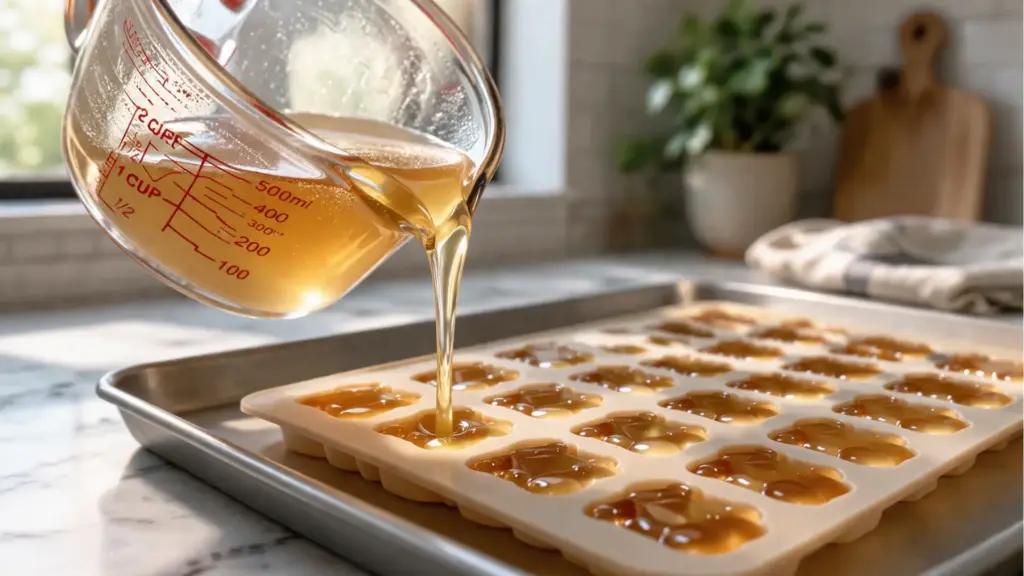
- Use a liquid measuring cup with a spout for pouring. Silicone molds are floppy and difficult to fill cleanly with a ladle. A standard 2-cup Pyrex measuring cup gives you precision and reduces mess significantly.
- Do not refrigerate before pouring. If the mixture sits at room temperature too long before you fill the molds, it will begin to gel unevenly. Move from mixing bowl to molds within 5 minutes of combining the liquids.
- Taste the liquid before pouring. This is the only stage where you can adjust sweetness. If it tastes too sharp for your preference, whisk in an additional teaspoon of honey before filling the molds.
- Set molds on a flat baking sheet before filling. This makes transporting filled molds to the fridge much easier and prevents spills from a wobbly silicone tray.
- For cleaner release, chill for closer to 2 hours. One hour sometimes produces gummies that are set but still soft enough to tear when removed from the mold. Two hours yields a firmer, more resilient piece.
- The mixture will look thin when poured. This is normal. Apple juice and ACV are low in natural pectin, so the raw liquid looks almost like water. Trust the gelatin to do its work in the fridge.
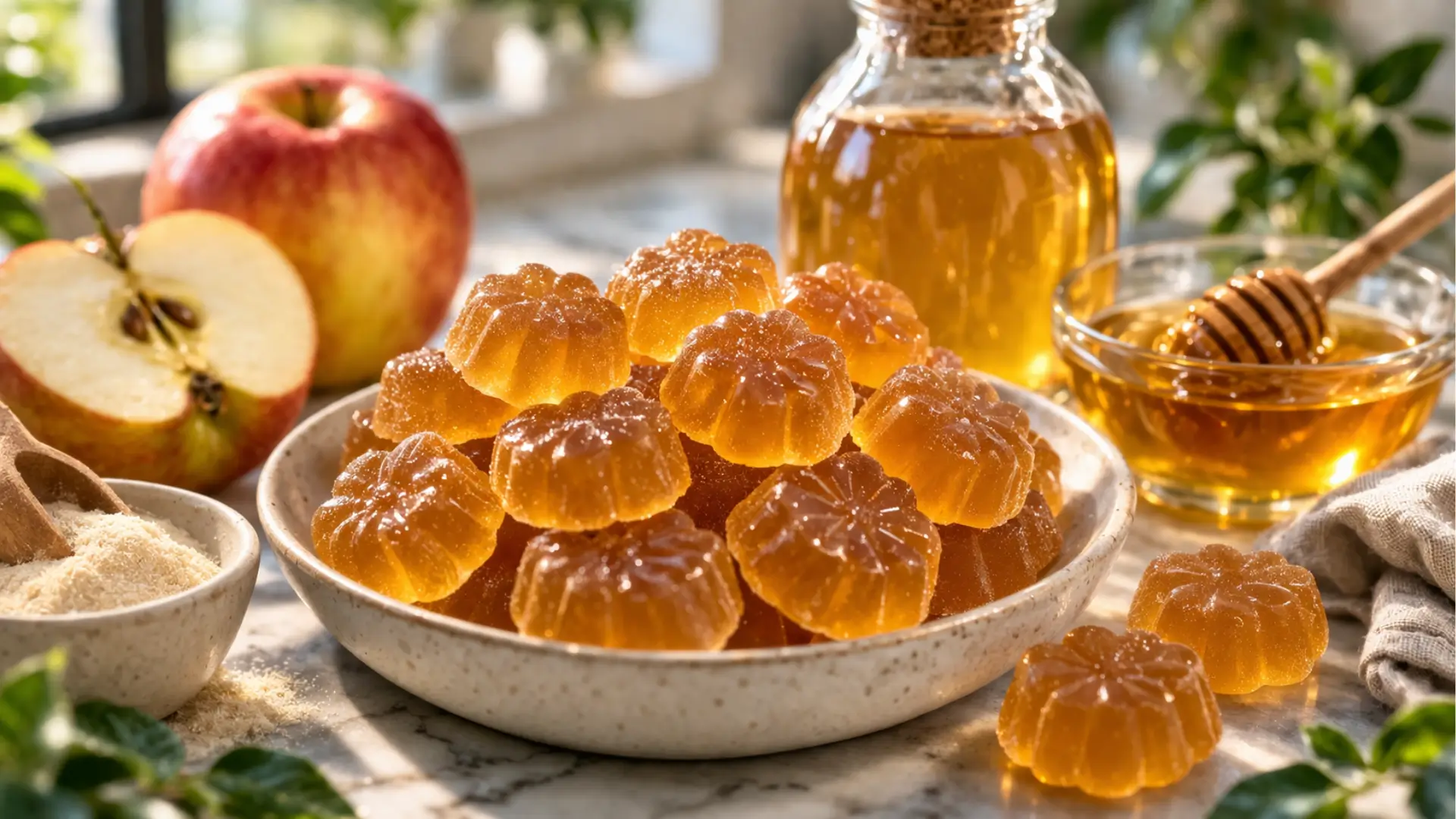
Apple Cider Vinegar Gelatin Recipe: Tangy ACV Gummies
Ingredients
Method
- Sprinkle gelatin granules evenly over apple cider vinegar in a medium saucepan. Let bloom undisturbed for 5 minutes.
- Whisk in apple juice, then place over medium-low heat. Stir constantly until fully dissolved (about 3-4 minutes). Remove from heat.
- Stir in honey until thoroughly combined. Strain mixture through a fine-mesh sieve into a heatproof container.
- Chill in refrigerator for 1 hour, then cover and refrigerate for 1-2 hours more until fully set.
- Cut into 24-30 small squares or use silicone molds for uniform sizes.
Notes
Light-colored honey prevents overpowering apple/cider flavors
Store in airtight container in fridge for up to 14 days
Mold mixture in parchment-lined container or silicone模具
Can add 1/2 teaspoon lemon zest for extra brightness
Common Mistakes to Avoid
- Boiling the apple juice. Temperatures above 90 degrees Celsius degrade gelatin’s protein chains and reduce its ability to set firmly. The juice only needs to be warm enough to dissolve the bloomed granules, roughly 60 to 70 degrees Celsius. If you boil it by accident, let it cool slightly before adding to the gelatin.
- Skipping the bloom entirely. Adding gelatin granules directly to warm liquid without blooming first is the single most common reason gummies turn out grainy. The bloom step is what guarantees even hydration. It takes two minutes and cannot be skipped.
- Using flavored or sweetened gelatin mix. Products like Jell-O contain sugar, artificial flavoring, and preservatives that interfere with the clean flavor profile of this recipe and alter setting texture. Use only pure, unflavored Knox gelatin.
- Filling molds on an uneven surface. Even a slight tilt causes gummies to set with uneven thickness, which affects both appearance and texture. Always place molds on a flat baking sheet before filling.
- Storing at room temperature. Gelatin softens and eventually liquefies at room temperature, especially in a warm kitchen. These gummies must stay refrigerated at all times. They are not shelf-stable.
Variations and Substitutions
| Ingredient | Substitution | Flavor and Texture Impact |
|---|---|---|
| Apple juice | Pear juice or white grape juice | Pear is subtler and slightly sweeter; grape adds more tartness |
| Orange juice (bloom liquid) | Pineapple juice (heat-treated first) or tart cherry juice | Cherry adds a deeper berry note; pineapple must be boiled first to neutralize bromelain, which breaks down gelatin |
| Honey | Pure maple syrup or agave nectar | Maple adds a mild caramel note; agave is more neutral and slightly sweeter by volume |
| Knox gelatin | Grass-fed beef gelatin powder (same quantity) | Sets slightly firmer; no flavor difference |
| Silicone molds | Greased 8×8 baking dish, cut into squares after setting | Produces a cleaner, more uniform shape; no texture difference |
For a vegan-friendly version, substitute Knox gelatin with agar-agar powder. Use approximately 2 teaspoons of agar powder for every 2 envelopes of gelatin. Note that agar sets firmer and less elastic than animal gelatin, and it must be dissolved in boiling liquid rather than warm liquid, which slightly changes the process. Also, agar sets at room temperature, so molds should be filled quickly before the mixture begins to gel in the bowl.
Serving Suggestions and Pairings
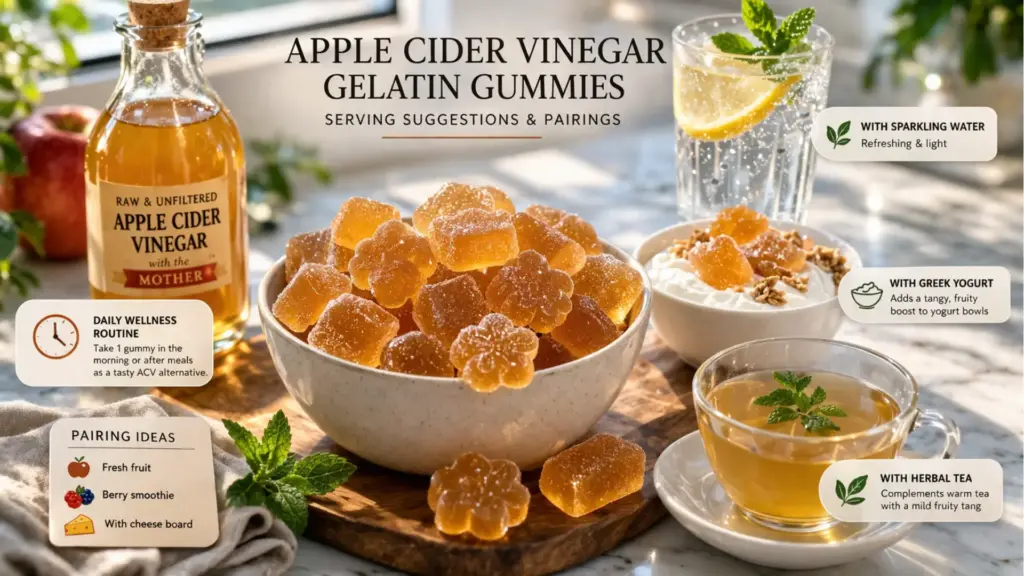
These gummies are best eaten cold, straight from the refrigerator, where their texture is at its firmest. They make a practical mid-morning snack alongside a handful of raw almonds or walnuts, which offset the tartness with fat and protein. The combination is more satisfying than either component alone.
For a light post-lunch option, serve three or four gummies with a cup of unsweetened herbal tea, particularly ginger or peppermint, which complement the vinegar’s brightness without adding competing sweetness. They also work as a palate-cleansing nibble at the end of a heavier meal.
If you are preparing these for children, consider cutting the ACV quantity to 3 tablespoons for the first batch and increasing honey to 4 tablespoons. The result is noticeably milder in tang, still fruity, and generally more approachable for younger palates.
Storage and Reheating
| Method | Duration | Instructions |
|---|---|---|
| Refrigerator (airtight container) | Up to 2 weeks | Layer gummies between sheets of parchment if stacking to prevent sticking |
| Freezer | Not recommended | Freezing changes the gelatin matrix and produces a grainy, watery texture on thawing |
| Room temperature | 2-3 hours maximum | Safe for serving at room temperature briefly; return to fridge after |
One practical storage tip: do not store these in a container with a loose fitting lid. Gelatin absorbs surrounding odors readily. A snap-seal container or a mason jar with a tight lid keeps the flavor clean and prevents the gummies from picking up any refrigerator smells over the two-week period.
Nutritional Information
Approximate values per serving (2-3 gummies, based on 24-30 total gummies per batch).
| Nutrient | Amount per Serving |
|---|---|
| Calories | 18 kcal |
| Protein | 2g |
| Total Fat | 0g |
| Carbohydrates | 4g |
| Fiber | 0g |
| Sugar | 4g |
| Sodium | 5mg |
These values are approximate and will vary based on the specific apple juice brand, honey type, and exact mold size used. The protein content comes entirely from the collagen-derived gelatin, which provides approximately 6 grams of protein per full envelope.
FAQs:
Can I use apple cider vinegar gummies as a substitute for liquid ACV doses?
Yes, these gummies deliver ACV in a controlled, consistent format per piece. Each gummy contains roughly 1/3 teaspoon of raw ACV based on the recipe yield, so a small handful gives you a meaningful daily amount. The gelatin does not neutralize the acetic acid, though the overall dose per gummy is lower than taking ACV straight from a spoon.
Why are my gummies still liquid after two hours in the fridge?
The most likely cause is that the gelatin did not fully dissolve during mixing, which typically happens when the apple juice was not warm enough. Pull the liquid mixture back out, gently warm it in a saucepan over low heat while whisking, and then re-pour into the molds. Do not add more gelatin, as the original quantity is sufficient if properly dissolved. Another possible cause is an incorrect gelatin-to-liquid ratio; confirm you used both full envelopes.
Can I make this recipe ahead of time for the week?
Absolutely, and this is actually the intended use. The gummies keep well in the fridge for up to two weeks, making them an ideal batch-prep snack. Prepare a double batch on Sunday and portion into daily serving containers for the week ahead. The flavor actually mellows slightly after the first 24 hours as the acidity integrates more fully into the gelatin matrix.
What can I substitute for Knox gelatin in this recipe?
Grass-fed beef gelatin powder is the closest direct substitute; use the same quantity by weight. For a plant-based option, agar-agar powder works but requires a different method: dissolve it in boiling liquid rather than warm liquid, and expect a firmer, slightly less elastic texture. Pectin is not a suitable substitute as it requires higher sugar concentrations to set properly and would not gel.
How do I know when the gummies are fully set and ready to remove from molds?
Press the center of one gummy gently with a fingertip. A properly set gummy springs back immediately and feels firm throughout, not tacky or yielding in the middle. If the surface feels slightly sticky or the gummy leaves a liquid impression under pressure, return the mold to the fridge for another 30 to 45 minutes. Edges and corners always set before the centers, so the center press test is the most reliable indicator.
Conclusion:
This apple cider vinegar gelatin recipe is one of those preparations that rewards simplicity. Four core ingredients, one mixing bowl, and two hours of passive refrigerator time produce a snack that is genuinely different from anything packaged, with a bright, tangy character that refined sugar could never replicate. The texture is firm enough to handle but soft enough to enjoy, and the apple-forward flavor keeps the vinegar from ever feeling medicinal. Make a full batch this week and keep it on hand as your go-to afternoon snack.
Follow us on Pinterest