
Cooking chicken the right way can feel tricky, especially if you don’t have a thermometer on hand. That’s why learning how to tell if chicken is done without thermometer is such a valuable kitchen skill. Whether you’re frying, baking, or grilling, you need simple and reliable ways to make sure your chicken is safe to eat while still juicy and delicious.
In fact, many home cooks rely on visual cues, texture, and cooking instincts rather than tools. And honestly, when you understand what to look for like clear juices, firm texture, and proper color you can confidently check if your chicken is cooked without guessing. Throughout this guide, you’ll discover practical methods used by experienced cooks, along with common mistakes to avoid.
If you’re experimenting with kitchen tricks and simple cooking methods, Learn more about… baking soda trick recipe for another easy cooking hack that improves texture and flavor.
So, if you’ve ever wondered how to know if chicken is cooked when frying, how to check doneness by touch, or even how to avoid overcooking, you’re in the right place. Let’s break it down step by step and make cooking chicken easier, safer, and stress-free.
Why It’s Important to Know If Chicken Is Fully Cooked
Understanding how to tell if chicken is done without thermometer isn’t just about cooking it’s about safety, taste, and confidence in the kitchen. While tools can help, knowing the signs of properly cooked chicken gives you full control, no matter where or how you cook.
The Risks of Undercooked Chicken and Food Safety Basics
First things first, undercooked chicken can carry harmful bacteria like salmonella. That’s why it’s essential to make sure your chicken is fully cooked before eating. Even though many people rely on timing alone, that method can be misleading because thickness, cut, and cooking method all affect doneness.
So, instead of guessing, you should look for clear indicators. For example, properly cooked chicken should have:
- Clear juices (not pink or red)
- Firm texture that springs back when pressed
- No raw or glossy interior
In other words, once you learn these signs, you won’t have to rely on a thermometer every time. Plus, combining multiple checks makes your results far more reliable.
If you’re exploring simple kitchen techniques that improve cooking results, Discover great ideas like recipe hacks using soft baked cookie mix to upgrade your everyday cooking skills.
USDA Guidelines vs Real Life Cooking Without a Thermometer
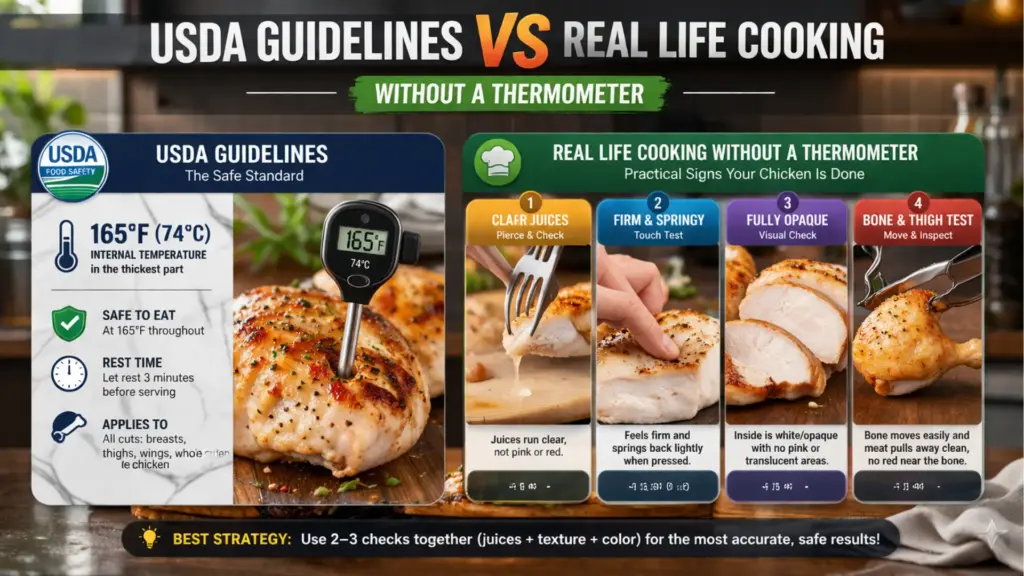
According to food safety guidelines, chicken is considered safe when it reaches an internal temperature of 165°F (74°C). However, not everyone has a thermometer available, and honestly, many experienced cooks don’t use one regularly.
That said, real-life cooking often depends on observation and experience. For instance:
- Thicker cuts like chicken breasts take longer than wings
- Bone-in chicken cooks differently than boneless
- Frying, baking, and grilling all affect cooking time
Because of this, relying only on time can lead to mistakes. Instead, using visual cues and texture checks gives you a more accurate result. Over time, you’ll naturally develop a feel for when chicken is perfectly cooked.
So, while thermometers are helpful, mastering how to know if chicken is cooked visually or by touch gives you a practical advantage in any kitchen situation.
By understanding both the risks and the real-world techniques, you’re already one step closer to cooking chicken safely and confidently without needing any special tools.
How to Tell If Chicken Is Done Without Thermometer (Core Methods)
Now that you understand why it matters, let’s dive into the most practical part how to tell if chicken is done without thermometer using simple, reliable methods. These techniques are used by home cooks and chefs alike, and when combined, they give you a very accurate result without any tools.
The Juice Test Checking for Clear vs Pink Juices
One of the easiest and most trusted ways to check chicken doneness is the juice test. Simply pierce the thickest part of the chicken with a knife or fork and observe the juices.
Here’s what to look for:
- Clear juices → chicken is fully cooked
- Pink or reddish juices → chicken needs more time
However, keep in mind that lighting can sometimes make juices look slightly pink. That’s why it’s smart to combine this method with others instead of relying on it alone.
Also, avoid cutting too deep too early, since this can release moisture and dry out your chicken. Instead, check quickly and let it continue cooking if needed.
The Texture Method Firm vs Rubbery Chicken Feel
Another powerful way to determine doneness is by touch. As chicken cooks, its texture changes noticeably.
- Raw chicken → soft and squishy
- Undercooked chicken → slightly firm but still rubbery
- Fully cooked chicken → firm and springs back when pressed
So, gently press the thickest part of the chicken using tongs or your finger. If it feels firm but still juicy, you’re on the right track.
This method becomes more accurate with practice. Over time, you’ll instantly recognize the difference without second-guessing yourself.
The Color Check White Meat vs Pink Center
Color is another strong indicator when learning how to know if chicken is cooked visually. Once you cut into the thickest part:
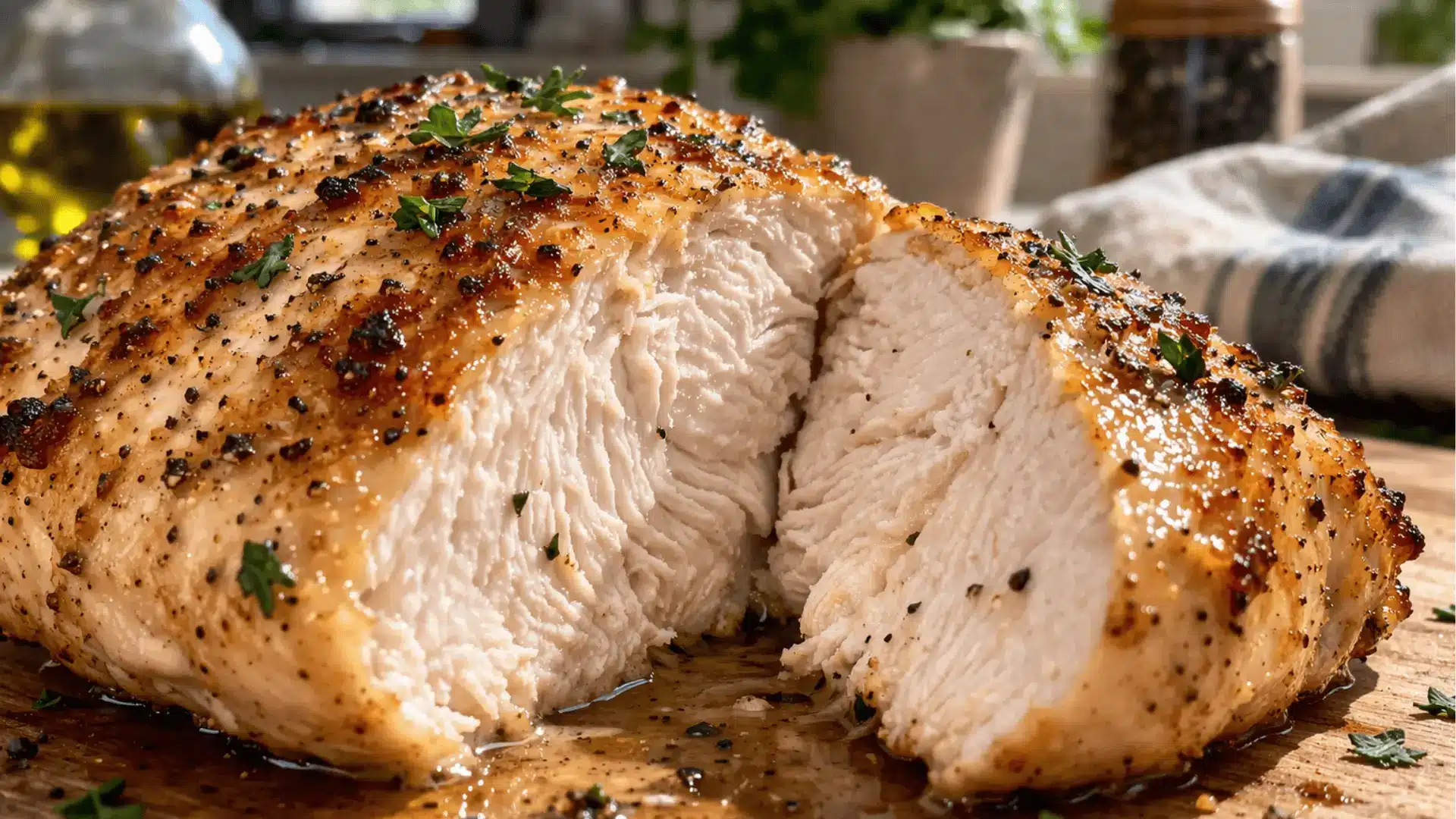
- The meat should be opaque white (for breast)
- Thighs may have a slightly darker tone but should not look raw or glossy
- There should be no translucent or jelly like texture
That said, a slight pink tint near the bone can sometimes appear even when chicken is safe ombining the juice test, texture method, and color check, you’ll dramatically improve your ability to judge doneness. In fact, using all three together is the best way to master how to tell if chicken is done without thermometer with confidence.
If you enjoy learning practical cooking techniques, Check out marian-designerstouch cinnamon roll hack recipe for another simple kitchen hack that delivers great results.
How to Know If Chicken Is Cooked Visually
When it comes to mastering how to tell if chicken is done without thermometer, visual cues play a huge role. In fact, many experienced cooks rely heavily on what they see rather than tools. However, you need to know exactly what to look for because appearances can sometimes be misleading.
Internal Color Indicators for Breasts, Thighs, and Wings
Different cuts of chicken cook differently, so their visual signs vary slightly. Still, there are clear indicators you can trust:
- Chicken breast → should be bright white inside with no translucent areas
- Chicken thighs → slightly darker (light brown or grayish tone), but fully opaque
- Chicken wings → small and quick-cooking, should have no pink near the center
Additionally, the meat should look matte, not shiny or glossy. A glossy or jelly-like appearance usually means it’s still undercooked.
So, when checking visually, always cut into the thickest part to get the most accurate result.
Common Visual Mistakes That Confuse Beginners
Even though visual checks are helpful, many people misread what they see. Here are some common mistakes:
- Assuming white outside = fully cooked inside
- Confusing lighting with actual color (kitchen lights can distort appearance)
- Not checking the thickest part of the meat
Because of these mistakes, relying only on the surface can lead to undercooked chicken. Instead, always combine visual checks with texture and juice tests for better accuracy.
If you like learning simple kitchen techniques that reduce mistakes, Don’t miss our recipe hacks using soft baked cookie mix for more smart cooking shortcuts.
Why Pink Doesn’t Always Mean Undercooked Chicken
Here’s something that surprises many people: pink chicken isn’t always unsafe. Yes, it sounds strange but it’s true in some cases.
For example:
- Chicken near the bone can stay slightly pink even when fully cooked
- Younger chickens may retain a pinkish hue
- Cooking methods like smoking or grilling can affect color
That said, you should never rely on color alone. Instead, check:
- Are the juices clear?
- Is the texture firm?
- Does the meat look fully opaque?
If all these signs are positive, your chicken is most likely safe even if there’s a faint pink tint.
By understanding these visual cues, you’ll get much better at judging doneness without tools. And when you combine this with the other methods, you’ll confidently master how to tell if chicken is done without thermometer in any cooking situation.
How to Check If Chicken Is Cooked by Touch
If you really want to master how to tell if chicken is done without thermometer, learning the touch method is a game changer. In fact, many professional chefs rely on feel rather than tools. Once you understand how cooked chicken should feel, you’ll be able to check doneness quickly and confidently.
The Finger Test Method Explained Step-by-Step
The finger test is simple, but it takes a bit of practice. Here’s how to do it:
- Use clean fingers or tongs to gently press the thickest part of the chicken
- Pay attention to how the meat responds
- Compare the resistance and bounce-back
Here’s what each stage feels like:
- Raw chicken → very soft and mushy
- Undercooked chicken → slightly firm but still squishy
- Fully cooked chicken → firm, springy, and slightly bouncy
If the chicken springs back when pressed, it’s usually done. However, if your finger sinks in easily, it likely needs more cooking time.
Comparing Raw, Cooked, and Overcooked Textures
Understanding the difference between textures is key when using touch:
| Chicken State | Texture Feel | What It Means |
|---|---|---|
| Raw | Soft and slippery | Not cooked |
| Undercooked | Rubbery and slightly resistant | Needs more time |
| Perfectly cooked | Firm and springy | Safe and juicy |
| Overcooked | Very firm and dry | Too much heat/time |
So, while firmness indicates doneness, too much firmness can mean the chicken is overcooked. That’s why balance is important.
Pro Chef Tips for Touch Based Doneness
To improve your accuracy, here are a few expert tips:
- Always check the thickest part of the chicken
- Use touch together with visual and juice tests
- Practice regularly to train your instincts
- Avoid pressing too hard, as this can release juices
Additionally, when cooking methods vary like frying or grilling the texture may feel slightly different. Still, the principle remains the same: properly cooked chicken should feel firm but not tough.
If you’re interested in mastering more cooking techniques, Looking for inspiration? Try marian designerstouch cinnamon roll hack recipe for another easy kitchen upgrade.
By learning how to check chicken by touch, you’re adding another powerful skill to your cooking toolkit. And when combined with visual cues and juice checks, you’ll confidently know how to tell if chicken is done without thermometer every time.
How to Know If Chicken Is Cooked When Frying
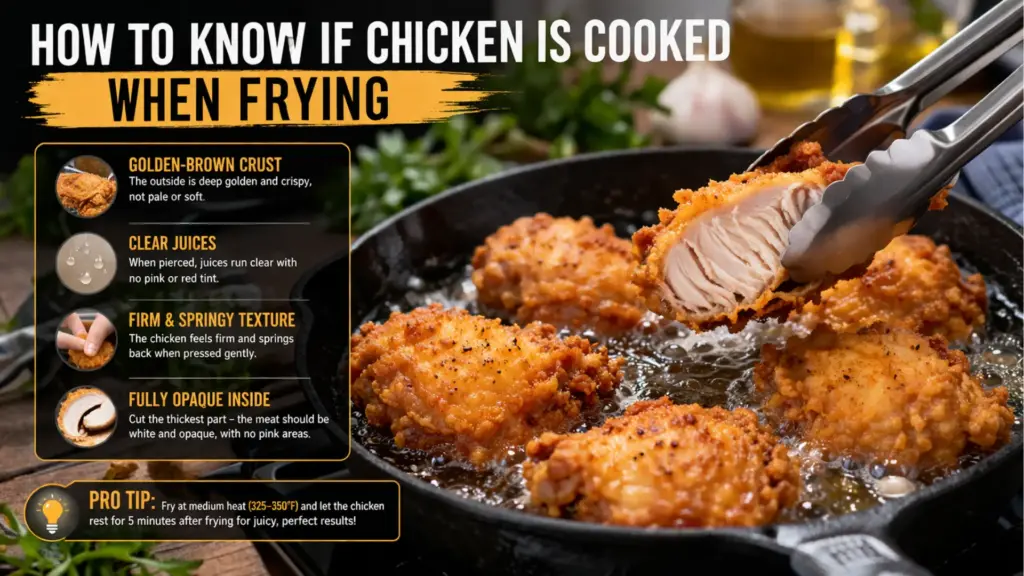
Frying is one of the most popular ways to cook chicken, but it can also be tricky. The outside often looks perfectly golden before the inside is fully cooked. So, understanding how to tell if chicken is done without thermometer becomes even more important when frying.
Signs Fried Chicken Is Done Without a Thermometer
When frying chicken, you need to rely on a combination of visual, sound, and texture cues. Here are the most reliable signs:
- Golden brown crust → indicates proper exterior cooking
- Crispy coating → suggests the chicken has cooked long enough
- Clear juices when pierced → confirms internal doneness
- Firm texture → means the inside is no longer raw
Additionally, properly cooked fried chicken should feel light but structured, not heavy or soggy.
However, don’t trust the crust alone. Sometimes the outside cooks faster than the inside, especially with thick pieces.
How to Tell If Chicken Is Done Without Thermometer
Ingredients
Method
- Preheat pan over medium heat
- Season chicken evenly
- Cook for 6–8 minutes per side
- Check juices and texture
- Rest for 5 minutes before serving
Notes
Does Chicken Float When It’s Done? Truth vs Myth
You may have heard that fried chicken floats when it’s done. While this is partially true, it’s not a reliable method on its own.
Here’s why:
- Chicken may float due to moisture loss and oil interaction
- Smaller pieces float faster than larger ones
- Floating doesn’t guarantee the inside is fully cooked
So yes, floating can be a supporting clue, but you should always confirm using other methods like checking juices or texture.
Golden Crust vs Internal Doneness
One of the biggest mistakes people make is assuming that a golden crust means the chicken is ready. In reality, the outside can brown quickly while the inside remains undercooked.
To avoid this:
- Fry at a moderate temperature, not too high
- Turn the chicken regularly for even cooking
- Always check the thickest part before serving
If needed, you can even finish thicker pieces in the oven after frying to ensure they’re fully cooked without burning the crust.
If you enjoy simple kitchen hacks that improve results, Learn more about how to make clove tea with clove powder for another easy and practical guide.
By combining these signs color, texture, and juices you’ll confidently master how to tell when fried chicken is done without a thermometer. And once you get the hang of it, frying chicken becomes much easier and far less stressful.
How to Tell When Whole Chicken Is Done Without a Thermometer
Cooking a whole chicken can feel intimidating, especially when you don’t have a thermometer. Since it’s thicker and includes bones, it cooks unevenly compared to smaller cuts. That’s why mastering how to tell if chicken is done without thermometer is even more important when dealing with a whole bird.
Checking Juices in the Thigh and Leg Area
The thigh area is the slowest part of the chicken to cook, so it’s the best place to check for doneness.
Here’s what to do:
- Pierce the inner thigh with a knife or skewer
- Observe the juices carefully
Results:
- Clear juices → chicken is fully cooked
- Pink or bloody juices → needs more time
Additionally, make sure you check deep near the bone, since that’s where undercooking usually happens.
How to Test Joint Looseness for Doneness
Another reliable method is checking how easily the joints move. This is a classic technique used by many cooks.
- Grab the leg and gently wiggle it
- If it moves freely and feels loose, the chicken is likely done
- If it feels tight or stiff, it needs more cooking
This works because, as chicken cooks, the connective tissues break down, making the joints more flexible.
Cooking Time Guidelines for Whole Chicken
While time alone isn’t enough, it still helps as a general reference. Here’s a basic guide:
| Weight of Chicken | Approximate Cooking Time (Oven) |
|---|---|
| 3–4 lbs | 1 hour – 1 hour 20 minutes |
| 4–5 lbs | 1 hour 20 – 1 hour 40 minutes |
| 5–6 lbs | 1 hour 40 – 2 hours |
However, always combine time with:
- Juice checks
- Joint looseness
- Visual and texture cues
That way, you avoid both undercooking and overcooking.
If you enjoy learning simple cooking techniques, Check out pulhia tea for another easy recipe idea to try at home.
By using these methods together, you’ll confidently handle whole chickens and fully understand how to tell if chicken is done without thermometer even with large, bone in cuts.
How to Know If Chicken Is Overcooked
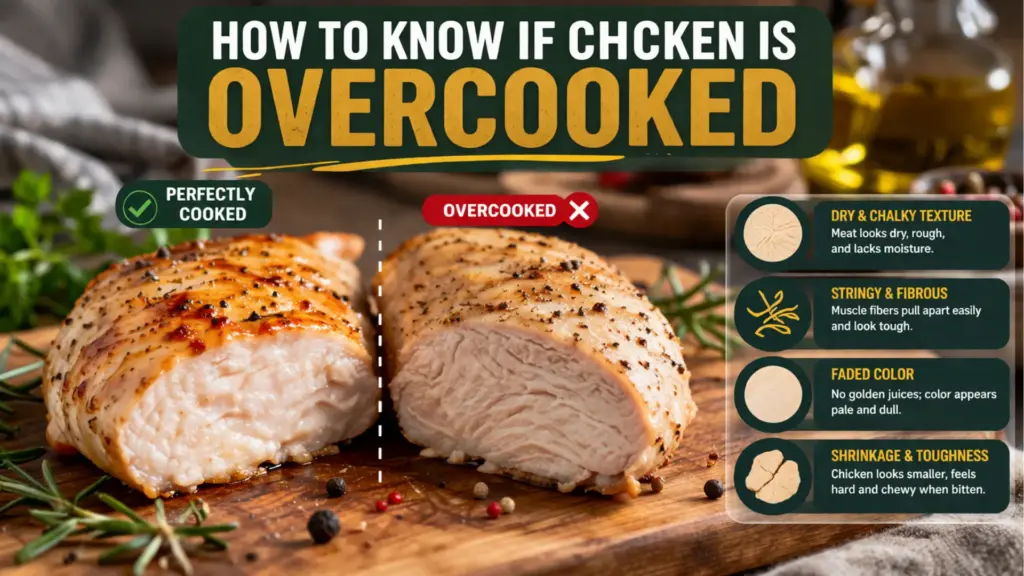
While learning how to tell if chicken is done without thermometer, it’s just as important to recognize when chicken is overcooked. After all, overcooking doesn’t make chicken safer it only makes it dry, tough, and less enjoyable to eat.
Dry Texture, Stringy Meat, and Loss of Juices
One of the clearest signs of overcooked chicken is its texture. Instead of being juicy and tender, it becomes:
- Dry and crumbly
- Stringy or fibrous when pulled apart
- Lacking natural juices
When you cut into overcooked chicken, you’ll notice very little moisture. In contrast, perfectly cooked chicken should release some juices and feel moist inside.
So, while firmness is good for doneness, too much firmness usually means you’ve gone too far.
Visual Signs of Overcooked Chicken
Visually, overcooked chicken also shows clear warning signs:
- Meat looks dull and faded, not fresh or slightly glossy
- Edges may appear too dark or even slightly burnt
- The inside can look chalky white or dry
Additionally, the outer layer may become overly crispy or hard, especially when frying or baking at high temperatures.
How to Avoid Overcooking While Ensuring Safety
Balancing safety and juiciness is key when mastering how to tell if chicken is done without thermometer. Here’s how to avoid overcooking:
- Use medium heat instead of high heat
- Check doneness early using juice, texture, and color methods
- Let chicken rest for a few minutes after cooking to retain moisture
- Avoid cutting repeatedly, which releases juices
Also, combining multiple methods like touch and visual checks helps you stop cooking at the right moment.
If you enjoy improving your cooking skills with simple tricks, Discover great ideas like the gelatin diet recipes for more helpful kitchen insights.
By recognizing these signs, you’ll not only cook chicken safely but also keep it juicy and flavorful. And that’s the real goal perfectly cooked chicken every time, without needing a thermometer.
Common Mistakes When Checking Chicken Doneness Without Thermometer
Even if you understand how to tell if chicken is done without thermometer, small mistakes can still lead to undercooked or overcooked results. The good news is that once you recognize these common errors, you can easily avoid them and cook with more confidence.
Cutting Too Early and Losing Juices
One of the biggest mistakes is cutting into the chicken too soon. While it might seem like a quick way to check doneness, it actually causes problems.
Here’s why:
- Juices escape, making the chicken dry
- The meat may not have finished cooking internally
- You lose flavor and tenderness
Instead, let the chicken cook fully, then check quickly and allow it to rest afterward. Resting helps redistribute juices, keeping the meat moist and flavorful.
Relying Only on Cooking Time
Another common issue is depending entirely on cooking time. While recipes provide estimates, they aren’t always accurate because:
- Chicken pieces vary in size and thickness
- Cooking equipment heats differently
- Methods like frying, baking, or grilling affect timing
So, even if the timer says it’s done, always double-check using:
- Juice clarity
- Texture firmness
- Visual cues
This combination is far more reliable than time alone.
Misinterpreting Color and Lighting
Color can be helpful, but it’s also one of the most misunderstood indicators.
Common mistakes include:
- Thinking all pink means undercooked
- Ignoring lighting conditions in the kitchen
- Judging only the outside appearance
In reality, lighting can make chicken look pinker than it actually is. That’s why you should always check in natural light if possible and combine color with other methods.
If you enjoy practical kitchen insights, Don’t miss our what are the 3-ingredients in the gelatin trick for another simple and helpful guide.
By avoiding these mistakes, you’ll significantly improve your ability to judge doneness. And more importantly, you’ll feel confident every time you cook.
Expert Tips to Always Cook Chicken Perfectly Without Tools
By now, you’ve learned the key techniques behind how to tell if chicken is done without thermometer. However, to truly master it, you need to combine these methods and apply a few expert tips. That’s what separates average cooking from consistently perfect results.
Combining Multiple Methods for Accuracy
Relying on just one method can lead to mistakes. Instead, always combine at least two or three checks:
- Juice test → clear juices confirm doneness
- Texture check → firm and springy feel
- Visual cues → fully opaque, no raw areas
When all these signs align, you can be confident your chicken is fully cooked. In fact, this layered approach is the most reliable way to master how to tell if chicken is done without thermometer.
Best Cooking Techniques for Juicy Chicken
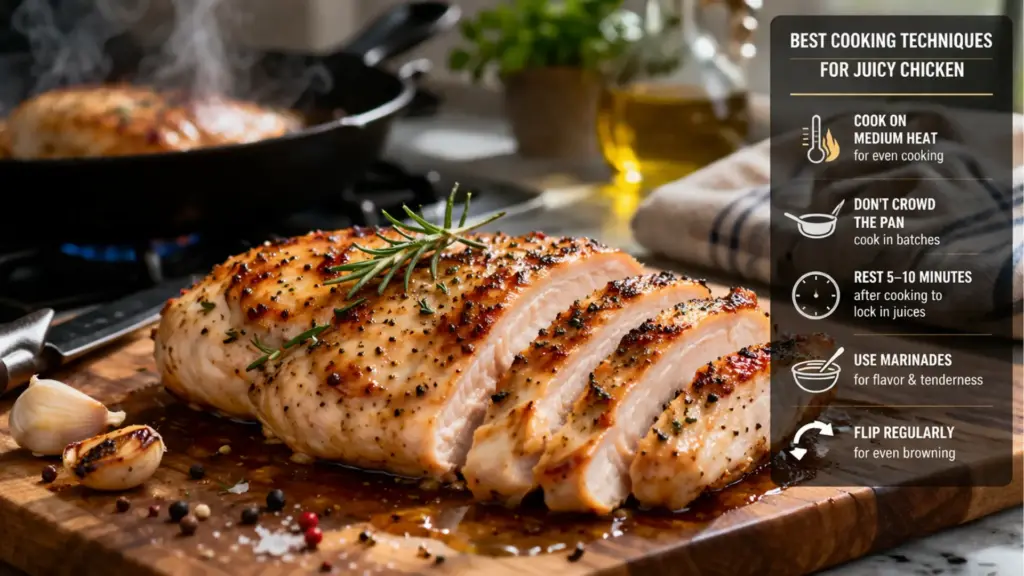
Cooking method plays a huge role in achieving perfect chicken. Here are some simple tips:
- Cook on medium heat for even results
- Avoid overcrowding the pan when frying
- Let chicken rest 5–10 minutes after cooking
- Use marinades to keep meat tender and flavorful
Additionally, flipping chicken regularly helps it cook evenly and prevents burning on one side.
When You Should Still Use a Thermometer
Even though you now know how to cook without one, there are times when a thermometer is still useful:
- Cooking very thick cuts or whole chicken
- Preparing food for guests or large groups
- When you’re unsure or trying a new recipe
So, think of these skills as your backup system. You won’t always need tools, but it’s good to have them when precision matters most.
If you enjoy improving your kitchen skills, Learn more about what is difference epsom salt vs regular salt for another interesting and practical guide.
By applying these expert tips, you’ll consistently cook chicken that is safe, juicy, and full of flavor. More importantly, you’ll never have to second guess yourself again when using how to tell if chicken is done without thermometer in real-life cooking situations.
FAQ Section: People Also Ask About Chicken Doneness
How can I tell if chicken is cooked without a thermometer?
You can tell by using a combination of simple methods. First, check if the juices run clear when you pierce the thickest part. Then, press the meat it should feel firm and spring back. Finally, cut into it and make sure the inside is fully opaque with no raw or glossy areas. Using all these together is the best way to master how to tell if chicken is done without thermometer safely.
Is it fine if chicken is a little pink?
Sometimes, yes. Chicken can appear slightly pink near the bone or due to cooking methods like grilling. However, it must still have clear juices, firm texture, and no raw or translucent parts. If you’re unsure, it’s safer to cook it a bit longer.
Can a diabetic eat baked chicken?
Yes, baked chicken is generally a healthy option for people with diabetes. It’s high in protein and low in carbohydrates, especially when prepared without heavy sauces or added sugars. Choosing lean cuts and simple seasonings makes it even healthier.
Is chicken done when it floats to the top?
Not necessarily. While fried chicken may float as it cooks, this is not a reliable sign of doneness. Floating can happen before the inside is fully cooked. Always double-check using juices, texture, and color.
How to visually tell if chicken is undercooked?
Undercooked chicken usually looks:
Glossy or shiny inside
Slightly translucent
Pink in the thickest parts
In contrast, fully cooked chicken should look opaque and firm
Is it okay to eat slightly undercooked chicken?
No, it is not safe. Undercooked chicken can contain harmful bacteria that may cause foodborne illness. Always ensure your chicken is fully cooked before eating, even if it looks close to done.
Conclusion: Master Cooking Chicken Without Guesswork
Learning how to tell if chicken is done without thermometer is a skill that every home cook should have. Not only does it make cooking more convenient, but it also helps you become more confident in the kitchen.
By combining visual checks, texture testing, and juice observation, you can accurately determine when your chicken is perfectly cooked. At the same time, avoiding common mistakes ensures your meals stay both safe and delicious.
If you’re looking to expand your cooking knowledge even further, Check out jillian michaels gelatin recipe for another simple and helpful recipe idea.
In the end, practice makes perfect. The more you cook, the easier it becomes to recognize the signs. And before long, you won’t need any tools you’ll just know.
Follow us on Pinterst